




ABOUT
A leaf falls from a tree, turning and swaying through the air before finally coming to rest within the space between branches.
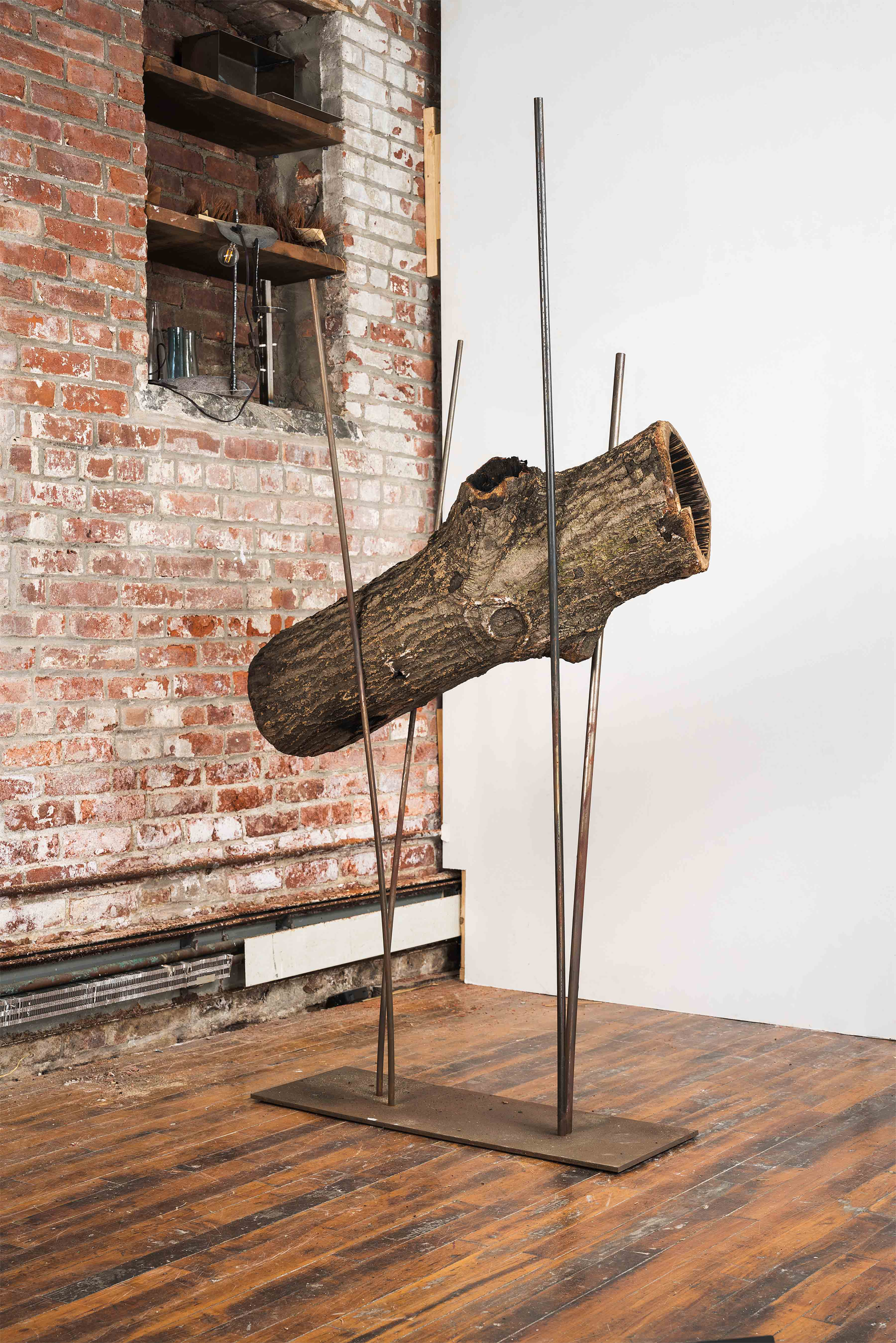
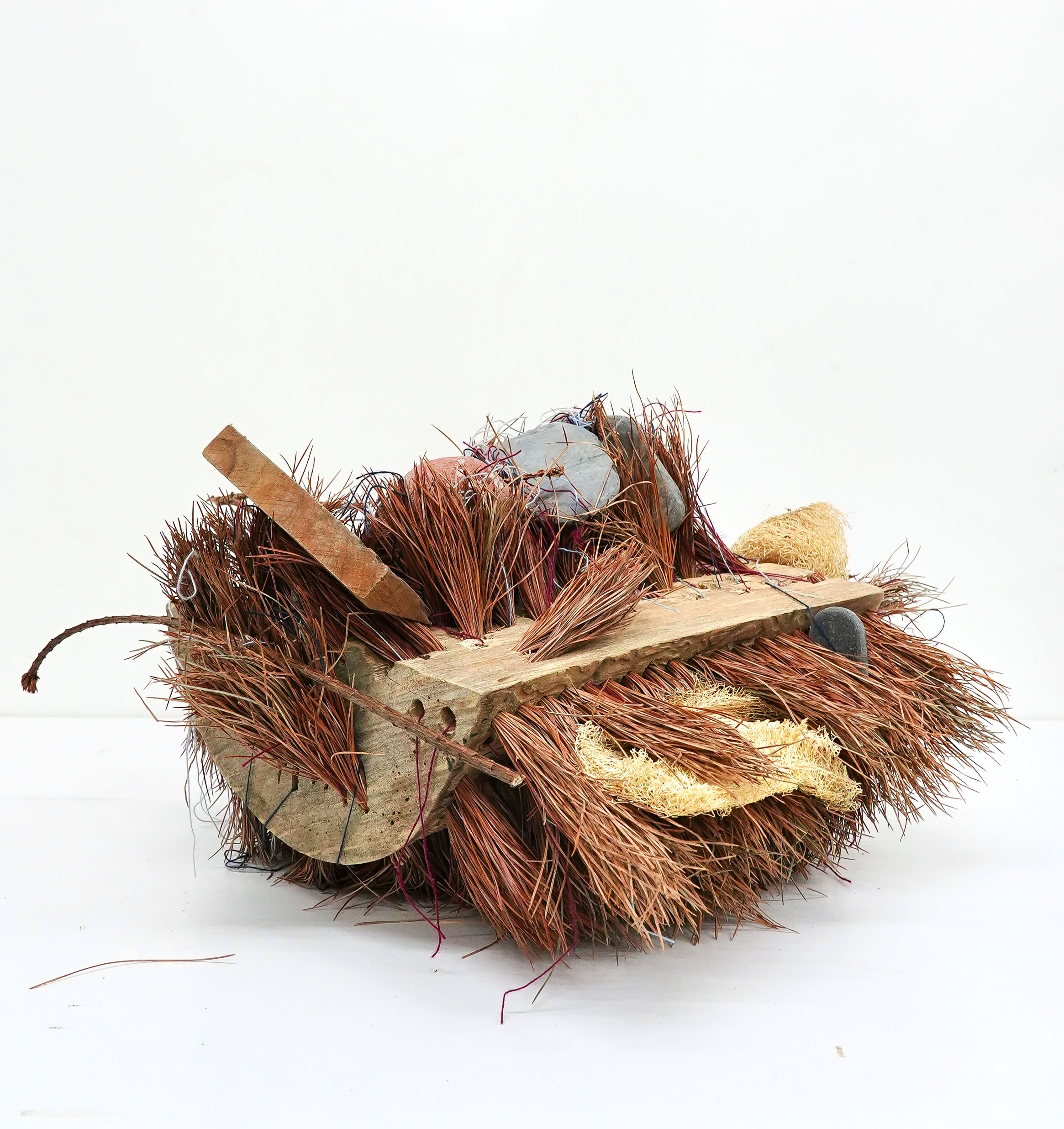
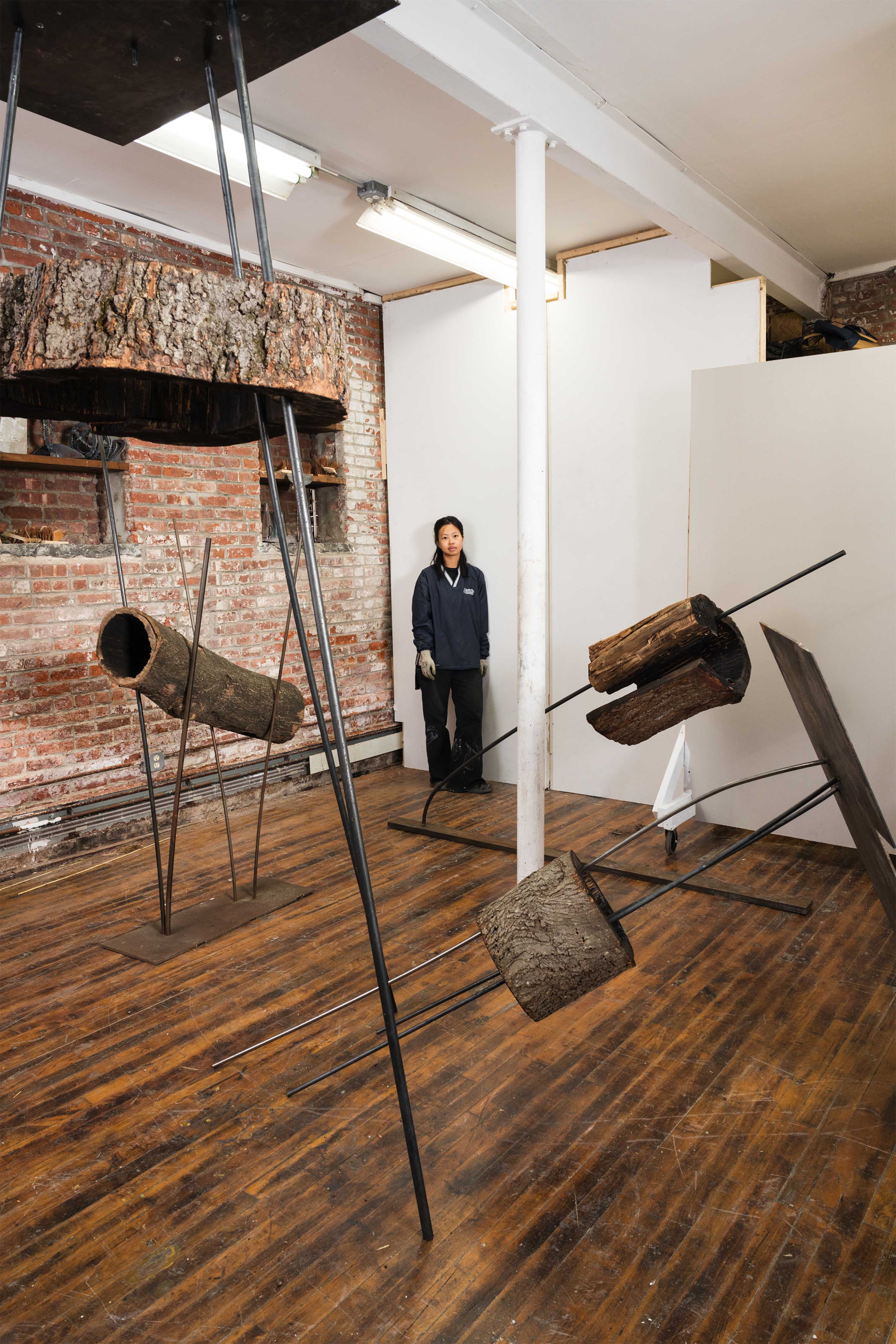
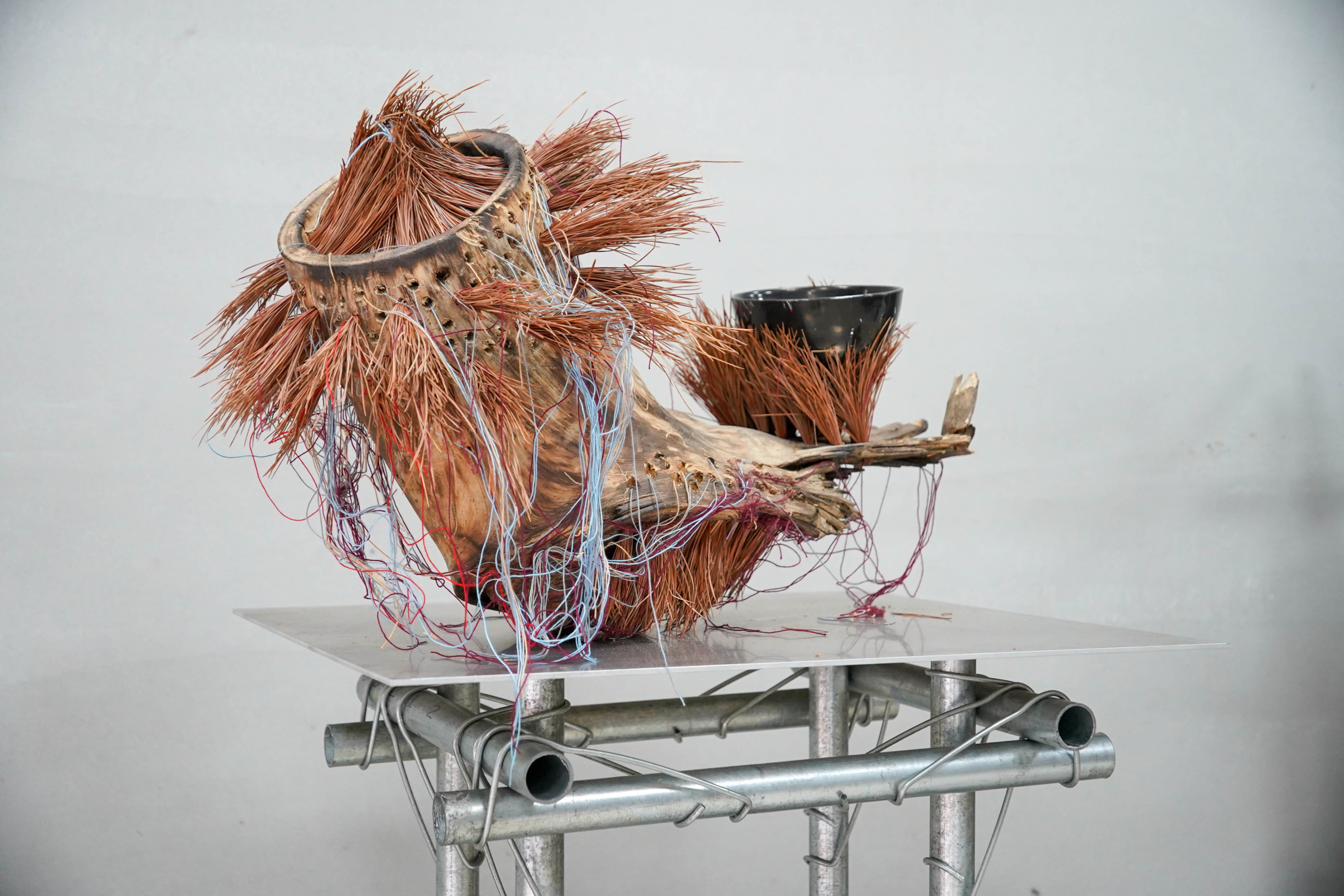
This seemingly accidental moment became the starting point for artist Utong Aoieong's solo exhibition Material Abstraction. In their practice, materials are not passive elements waiting to be shaped; instead, they are constantly changing through interaction, movement, and connection.Soil, wood, metal, and found objects are rearranged, layered, and reimagined, inviting us to reflect on our relationship with nature and how human intervention has transformed materials from their original states.
From Architecture to the Essence of Materials
Utong has always been deeply interested in the process of making. During their studies in architecture, they began to feel disconnected from the conventional use of architectural materials. While working with these materials, they became increasingly fascinated by the relationship between humans and materials, as well as the questions that emerged through the process of making. Seeking answers through direct experience, they eventually turned toward sculpture as a way to further explore these ideas.
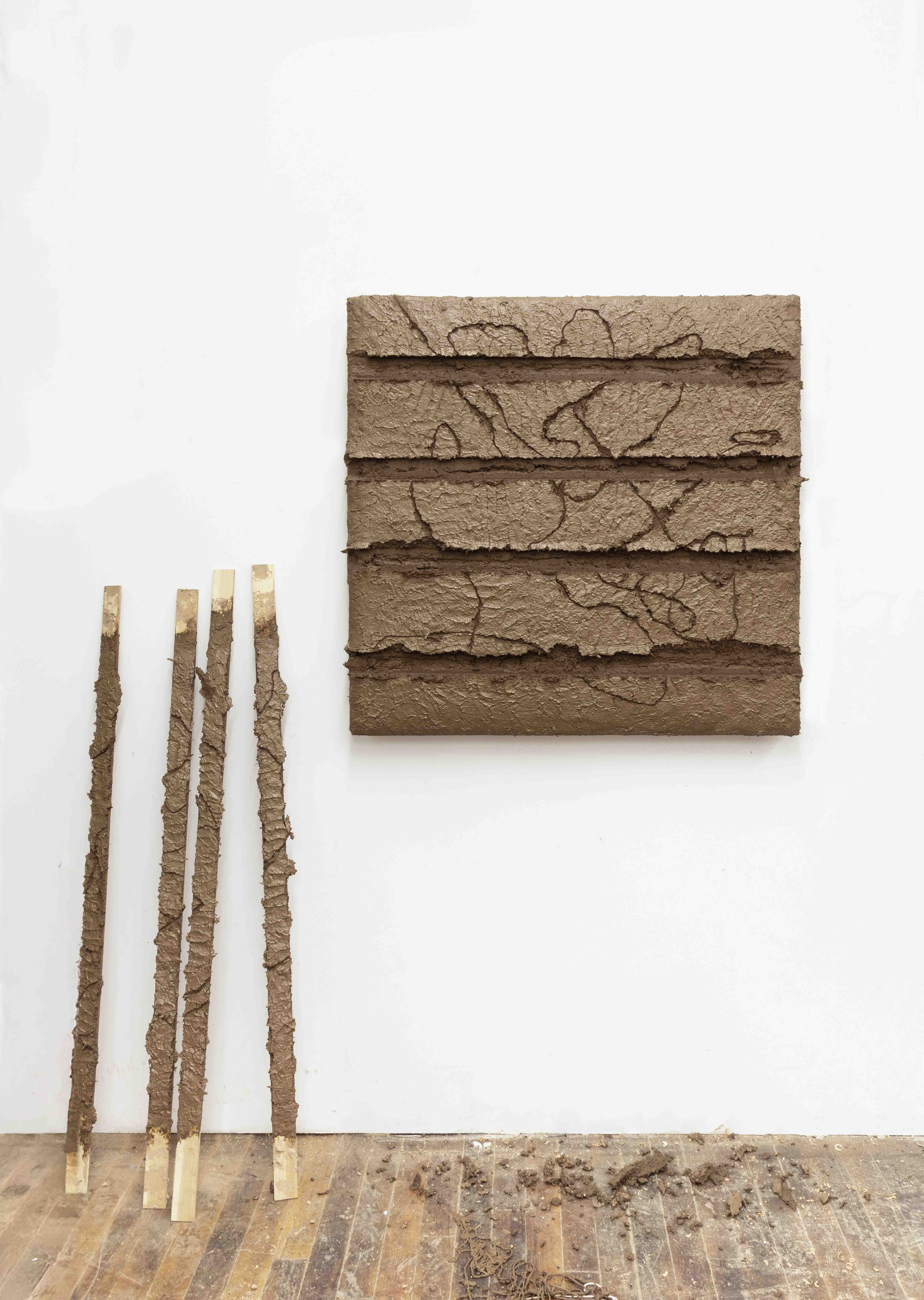
Design became a starting point that encouraged Utong to observe their surroundings and search for deeper connections with the world. Their curiosity toward materials began with simple yet fundamental questions: How do different materials become what we encounter today? Cement,for example, is not a substance that naturally exists in the earth in its current form, but rather a material shaped through human industrial development.For Utong, the question of “What is cement?” is more meaningful than simply asking how it can be used.
They bring this way of thinking into their artistic practice by breaking apart, questioning, and reconstructing their relationship with materials. This process often involves uncertainty and difficulty, but it is an essential part of their work. Through their works, viewers are able to witness the artist’s attempt to reconnect with the world around them.
From Man-Made to Natural: Reconnecting with Materials
People have become accustomed to objects that are already transformed and ready-made, yet
rarely stop to consider what these materials were before they were altered.From electronic devices and architectural structures to the roads we walk on every day, humans continuously transform natural elements into functional objects. Through processes of extraction, modification, and production, we gradually distance ourselves from the original states of materials.Utong believes that education often teaches people how to “use” ready-made objects, but rarely encourages a deeper understanding of how these objects are formed. This question became an important foundation of their practice. They began returning to materials in states that are less frequently seen—such as soil, wood, and natural found elements, in order to understand them beyond their assigned functions in the society. Rather than asking, “How do we use cement?” the more important question for Utong is: “What is cement?”
By tracing the processes through which materials are transformed, named, and given purpose,they simultaneously deconstruct their own ways of thinking. Within this approach, materials are no longer simply tools for creating objects; instead, they become a way of seeing and understanding the world differently.
Allowing Materials to Return to Their Own States
Utong holds a different perspective on the preservation of artworks. Traditionally, artworks are expected to remain intact, and changes such as discoloration, cracks, or rust are often considered signs of deterioration. However, for Utong, these transformations represent the material gradually returning to its own natural state.
Wood becomes fragile over time, while metal oxidizes and develops rust through its interaction with the environment. These changes are not failures of the artwork, but evidence of the material continuing to exist and respond to its surroundings.As their practice gradually shifted from industrial materials toward elements closer to natural states, Utong began to question whether the act of “preserving” an artwork is, in some ways, also an attempt to resist the inherent nature of materials.
Rather than focusing only on the final outcome, Utong is more interested in the process of creation itself. For them, making is not simply about shaping forms, but a way of understanding materials, oneself, and the surrounding environment. Through working with materials, they do not seek to control them, instead, they gradually learn how to create alongside them.
Information provided by Utong Aoieong
Interview & Edited by Yun-Chen Wu